By: Olin Lagon
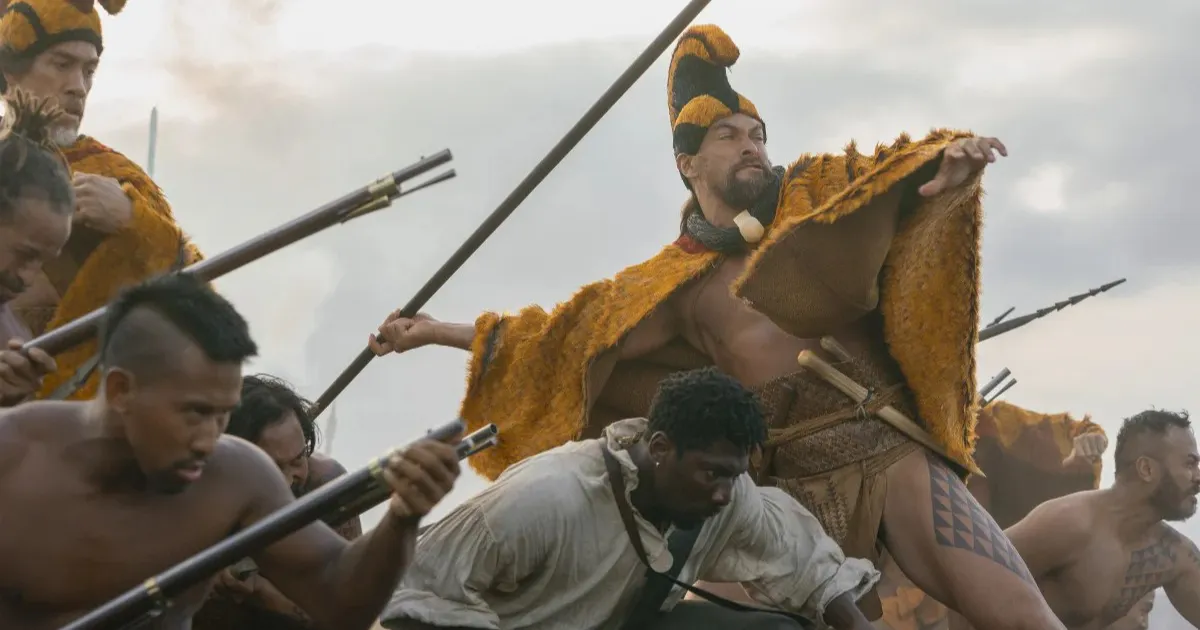
I am not a fan of violent shows. But I made an exception for Chief of War.
I watched the first episode at one of the premieres, so I got to hear directly from Paʻa Sibbett, one of the writers. He shared something that stuck with me: nothing made it into the show unless it was rooted in evidence. He gave one example: Jason Momoa wanted spears thrown in battle in a specific way, and Paʻa only wrote it in after he found historical precedent.
I expected the show to pull me into history. Instead, I could not stop thinking about Captain Cook and Artificial Intelligence (AI). Cook brought guns, germs, and steel, and with them a collision course of mass disruption. AI feels like a second arrival, a Captain Cook 2.0 moment, not because the story is the same, but because the imbalance is familiar and the disruption roots before we can agree on the rules.
Kahekili is portrayed as the antagonist. But I saw something else. I saw a chief trying to hold the line. He refused English. He leaned into ʻike kūpuna. He resisted Western religion as it began to take hold. Kamehameha, in contrast, chose to weave in guns and steel. The show made clear this was not an easy choice. I am not judging either path. I am noticing the burden of leadership when the world changes faster than our values can translate.
AI is not just technology. It is pressure. A tool that can multiply power. A force that rewards speed. A system that reshapes language, work, and attention before we have even agreed on what any of it should mean. New forms of leverage that can reorder society fast.
Some of us will respond like Kahekili, rejecting what feels alien. Others will respond like Kamehameha, adopting carefully, not because we love change, but because refusing it may cost too much. Either way, the choice is not only about tools. It is about who gets to define reality when the tool starts speaking for us.
What gives me hope is that our history already carries the deeper lesson. The point was never that one chief was right and one was wrong. The real fight was for ʻike, for identity, for the right to remain Hawaiian while the ground shifted under our feet. AI will test that same muscle. Our kuleana is to protect the sacred edge where we decide who we are, even as we learn how to live in a world that will keep offering new power at the price of forgetting our past.
If the show demanded proof before putting a spear on screen, what proof should we demand before we let machines shape our work, our relationships, our schools, and our sense of what is true?
This story appears in the March/April 2026 issue of Taking on Tomorrow.
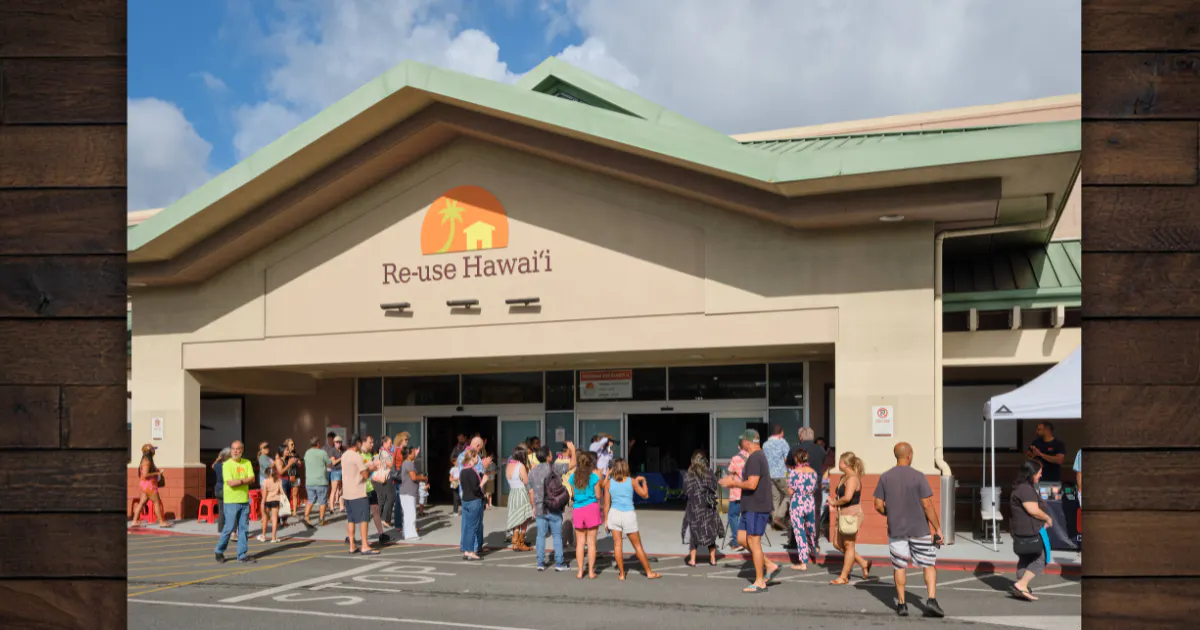
For 20 years, Re-use Hawaiʻi has been transforming what looks like waste into opportunity. This year, they celebrate two decades of giving second chances to materials and people.