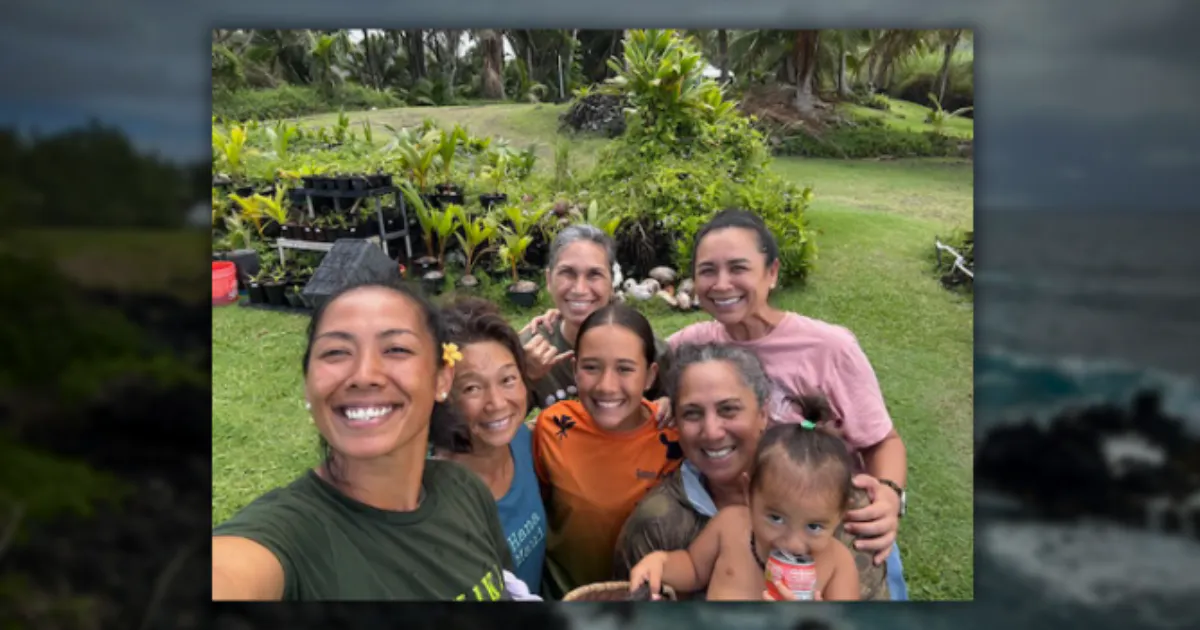
Photo courtesy Kelly Miyamura
The Immersive Huakaʻi is a defining experience in the Omidyar Fellows program. Guided by mentors and grounded in purpose, each Fellow journeys into a community whose work reflects the future they hope to help create for Hawaiʻi. The experience is an opportunity to listen deeply, learn from others, and return with new insights to share.
By: Kelly Miyamura
I return from Hāna with deep gratitude for the incredible hoʻokipa and grace I experienced in this powerful community. Each morning, I woke on the eastern shore beside Puʻu Kaʻuiki, which watches over Hāna Bay and marks the birthplace of Queen Kaʻahumanu. I often found myself thinking of another beloved kumu from my elementary years, Namahana Kalama-Panui, who commuted weekly to Hāna to teach keiki hula and helped compose the mele Ke Alaula (“The Dawning”).
In many ways, the dawning I experienced in Hāna was not about encountering something new, but about seeing more clearly what has long existed. Through the generosity of those who shared their stories, stewardship, and ʻike, I gained a deeper appreciation for the wisdom, relationships, and practices that have sustained this community across generations. What struck me most was not simply their history, but their continued relevance and power to guide Hawaiʻi’s future.
My huakaʻi unexpectedly began in a literal and physical way as I learned to braid ʻaha, an eight-stranded cord, from my host who carries a deep love for this practice inspired by John Kaʻimikaua. What began as a weaving metaphor quickly became something much deeper: a powerful teaching about attention, intention, relationship, and responsibility.
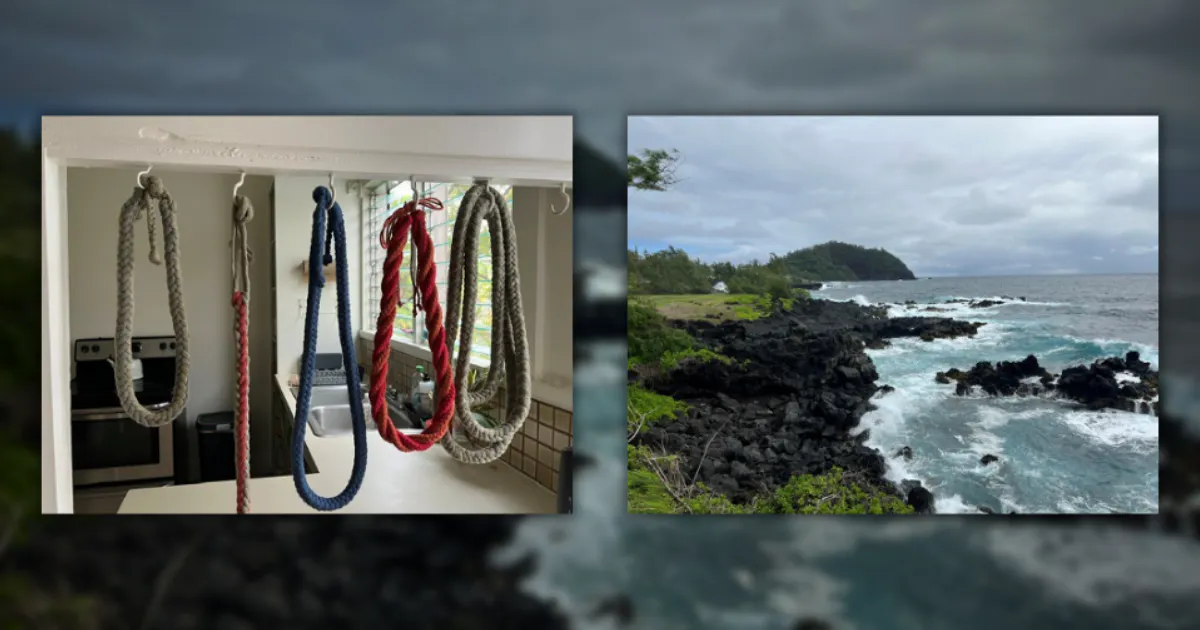
Photos courtesy Kelly Miyamura
The practice of braiding ʻaha reminded me that strength is not found in a single strand, but in the careful weaving together of many strands, each contributing its own purpose and integrity to create something resilient. It also brought new meaning to the concept of ʻaha as a council, where individuals contribute distinct gifts and perspectives in service of a shared purpose. Members of an ʻaha were not simply knowledgeable; they were grounded spiritually, emotionally, mentally, and physically in their relationship to ʻāina and community.
Throughout my time in Hāna, I witnessed this same principle come alive. Alongside community members, I experienced the collective practice of kilo, where no one person holds all of the ʻike and understanding of place emerges through observation, dialogue, and shared learning. I saw the revitalization of haku mele and ʻoli as living pathways to reclaim, commemorate, and carry forward genealogy, culture, and ʻike. I learned about restoration efforts on lands now protected and stewarded by those with deep, intergenerational ties to Hāna. These practices, many of which have been revitalized and strengthened over the past decades, offer powerful examples of what it means to sustain both place and people.
This story appears in the July/August 2026 issue of Taking on Tomorrow.
Babā Yim reflects on lessons in relationships, perspective, spirit, and self-care gathered from different alaka‘i across Hawai‘i.