Photos courtesy Olin Lagon
The Immersive Huakaʻi is a defining experience in the Omidyar Fellows program. Guided by mentors and grounded in purpose, each Fellow journeys into a community whose work reflects the future they hope to help create for Hawaiʻi. The experience is an opportunity to listen deeply, learn from others, and return with new insights to share.
By: Olin Lagon
There is a plaque outside a red brick church in Boston that lists over two centuries of proud firsts. The first anti-slavery speech by William Lloyd Garrison. The first chartered branch of the NAACP. And near the top, five words and a year that stopped me cold on the sidewalk.
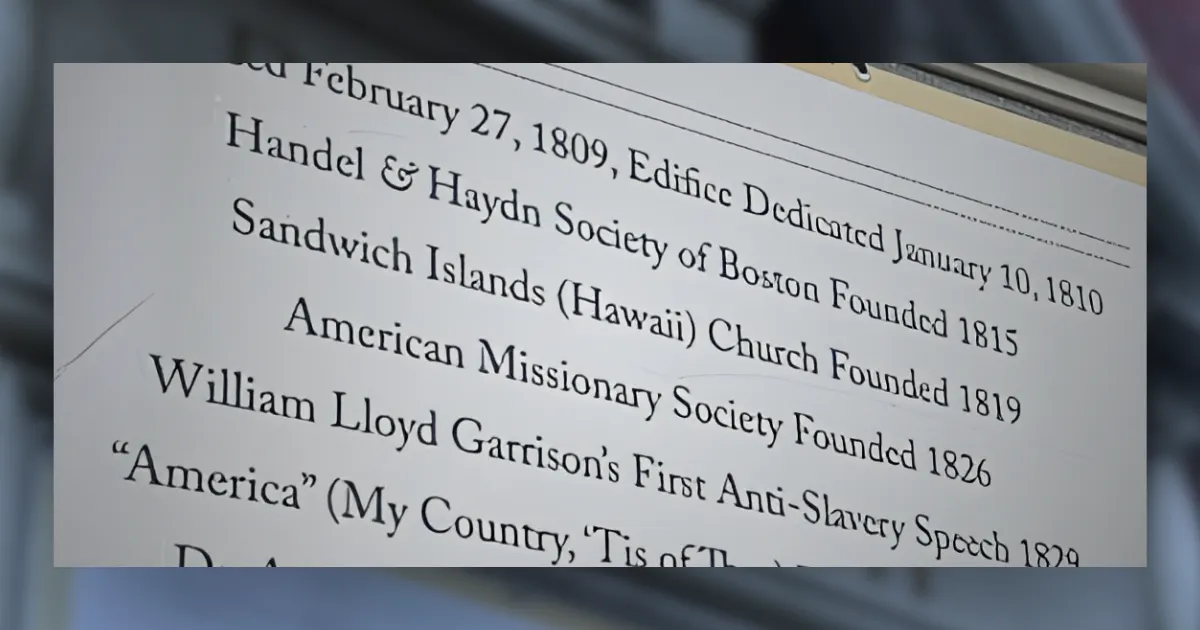
Photo courtesy Olin Lagon
Sandwich Islands (Hawaii) Church Founded 1819
That is us.
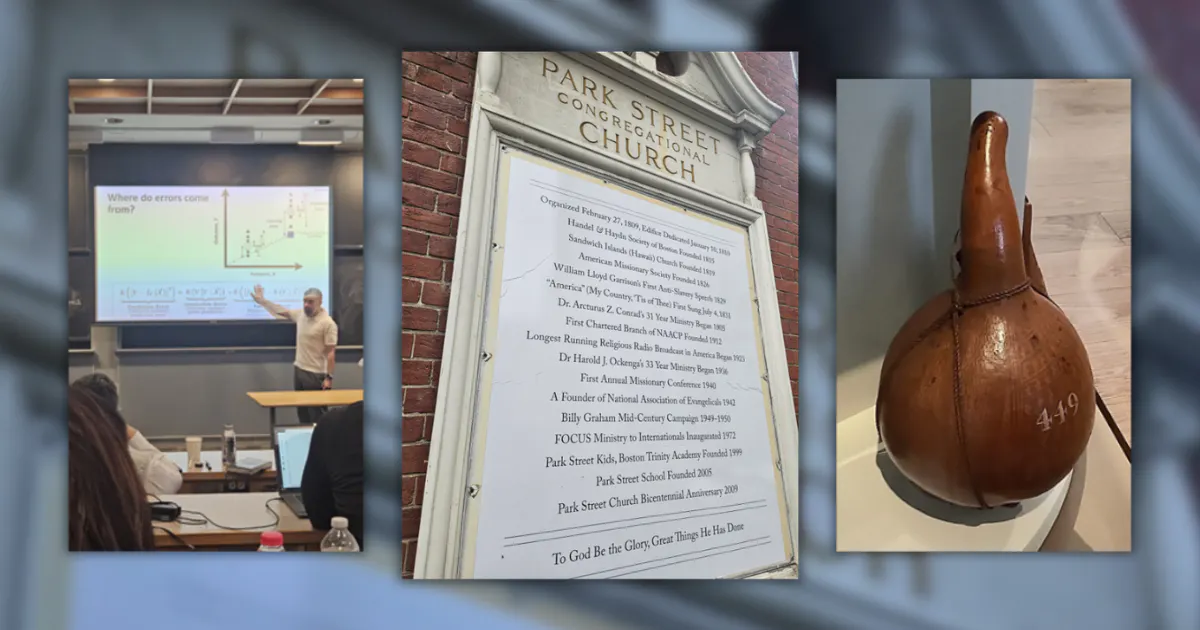
Let me back up. I have logged a lot of hours in Boston over the years and never once done a tourist thing. No duck boats. No Cheers bar. I go where the stories are. My huakaʻi was planned for months and it delivered. Days and nights immersed in AI strategy at MIT. Salem, where one of the largest collections of our kūpuna treasures outside Hawaiʻi sits, thousands in storage, a few on display. Every hour was planned except one rainy morning. And for reasons I still cannot explain, I did the most touristy thing in America. I walked the Freedom Trail.
The trail exists because the people of this city refused to be governed without their consent. They started a revolution over it. I stood at the graves of Samuel Adams, John Hancock, and Paul Revere. Steps from their headstones hangs this plaque marking the mission to my islands.
Standing on that trail, I felt something I still do not have clean words for. Boston is the birthplace of American self-determination. I felt the weight of that at every stop. It is also where part of our unraveling began. In 1819 this congregation sent off America's first missionaries to Hawaiʻi. Within a few generations, descendants of that mission and the waves that followed—families like Alexander and Baldwin—held the plantations and the fortunes. Fortunes were not enough. A grandson of a missionary who sailed on that first voyage organized the group that overthrew our Queen. They called themselves the Committee of Safety, borrowing the name from the committee John Hancock led in this revolution. Even the warship that landed the troops was the USS Boston. They knew the language of liberty. I heard it spoken proudly at every stop on the walk.
I am not throwing daggers at Boston. But it is hard to stand inside a celebration of sovereignty told only from its pretty side, knowing American Indian and Hawaiian sovereignty were sacrificed along the way. Boston exported many things to our shores. Freedom never made the manifest.
I skipped the subway and walked the long way back to my hotel to sit with what I had just seen. For two centuries Boston has been sending things to us that changed us. Merchant ships. New England whalers. Sandalwood debt. Missionaries. A printing press in the hold of that 1819 ship. And now AI, with core pieces invented in the very labs I had spent the week inside.
The difference this time is that I was not waiting on the beach. I flew 5,000 miles to the source to sharpen strategies for the technology reshaping our future, and stumbled into the place where so much of our past was set in motion. We cannot take on tomorrow without sitting in yesterday, even when yesterday hurts.
This story appears in the July/August 2026 issue of Taking on Tomorrow.
Kelly Miyamura recounts what immersing in community practices taught her about collective strength, shared purpose, and intergenerational wisdom.