By: Lia Hunt and Ashley Lukens
Over the past six months, Harriet Foundation has been in a deliberate 0–1 phase—listening deeply, designing carefully, and clarifying our role before launching programs. Rather than rushing to implementation, we have focused on building a strong foundation rooted in community insight, systems awareness, and family legacy.
Stakeholder Interviews & Landscape Mapping
We conducted extensive interviews with educators, workforce leaders, employers, funders, youth advocates, and community-based organizations. These conversations helped us understand where existing educational and career-learning pathways succeed, where they break down, and where young people—especially those historically excluded from opportunity—fall through the gaps. This process clarified that Harriet Foundation’s role is not to duplicate programs, but to bridge education, paid learning, and dignified work in ways that feel real, local, and attainable.
Program Design & Theory Building
Using these insights, we began designing a set of tightly scoped, high-impact program models that connect young people to infrastructure, trades, and place-based careers through hands-on learning and trusted relationships. Our focus has been on defining the minimum viable interventions—the smallest set of actions that can unlock momentum, confidence, and economic opportunity. These designs will be tested through pilot programs in 2026, with refinement and expansion planned for 2027–2028.
Clarifying Our Unique Contribution
A critical part of this work has been articulating what makes Harriet Foundation distinct. Our approach is deeply inspired by the women in Fellow Lia Hunt’s family—women who built stability, opportunity, and dignity through persistence, practical skill, care for place, and belief in the next generation. That legacy shows up in how we work: valuing relationship over transaction, honoring lived experience as expertise, and insisting that pathways to work must be both rigorous and humane.
Looking Ahead
By the end of this 0–1 phase, Harriet Foundation has a clear sense of purpose, partnership strategy, and program direction. 2026 will be a year of pilots and proof, and 2027–2028 will focus on scaling what works, in collaboration with partners across education, workforce development, and philanthropy. Our goal is not just to launch programs—but to build a durable, values-driven model that expands opportunity while staying grounded in family, community, and place.
This story appears in the January/February 2026 issue of Taking on Tomorrow.
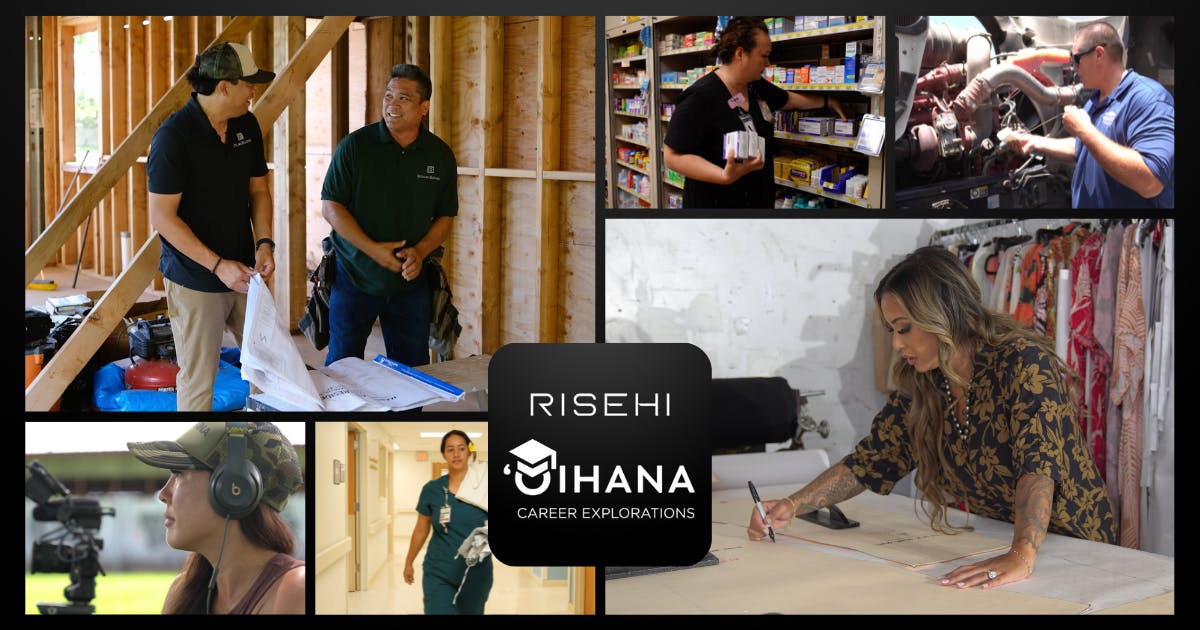
Gabe Amey provides an update on RiseHI’s ʻOihana Career Explorations program, which continues to grow as a powerful bridge between education and Hawaiʻi’s local workforce.