Across our community, Fellows are engaging with ʻāina in deeply personal and meaningful ways. We invited several Fellows to reflect on their connection to ʻāina and what it means to care for it in this moment. We share their perspectives below.
Editor’s note: these responses were written before the Kona Low storms in March 2026.
Stephanie Shipton
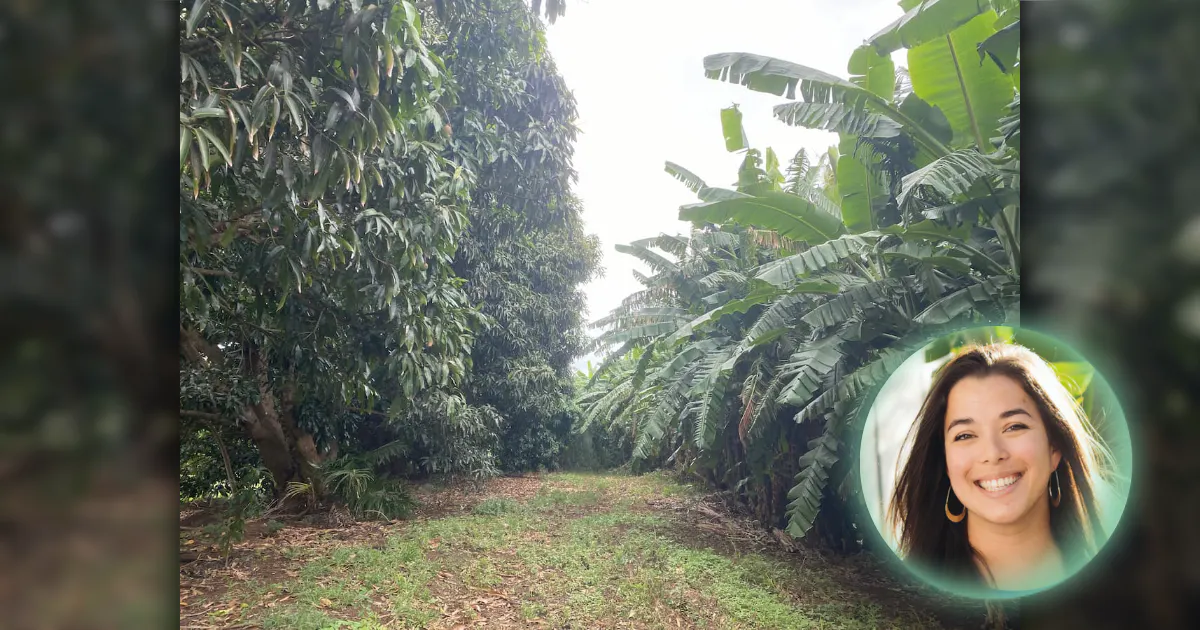
ki‘iki‘i farm provisions in Waialua
Photo courtesy Stephanie Shipton
In what ways do you or your organization support ‘āina well-being?
At kiʻikiʻi farm provisions, we do more than grow fruits and veggies, we grow connection. Bringing people closer to the land and to each other by partnering with local grocers, markets, and nonprofits to make local food accessible to local families at all income levels. We host community workdays, bringing everyone from keiki to kūpuna to the farm to build the relationship with the land and the food they eat. It’s not just what we do, but how we do it. The land, the plants, everything that moves through our lot is family. We pour our hearts, our intention, and our attention into knowing and caring for this place.
What organizations are you involved with that support ʻāina?
Papahana Kuaola: We participated in their Eke Kua programming with our kiddos and their community workdays. We have wauke and huli from their land growing at our farm—supporting cultivation of more culturally important plants around the island of Oʻahu.
Hawaiʻi Indigenous Natural Agriculture Cohort with Kumu Alika Atay: We are participating in the North Shore Oʻahu cohort where we hui with other farmers on a curriculum that integrates Korean Natural Farming practices with Hawaiian values, spirituality, and practices. They are launching a new cohort in Mākaha.
Hānai Collective: Chef Andres Bravo is a farmer and a chef who works with locally sourced ingredients to feed the houseless community on the North Shore of Oʻahu. Partnering with local farmers, he runs a soup kitchen twice a month in Waialua. We are proud to donate produce to his soup kitchens.
Hānai Hives: Hānai Hives is a family-owned, wahine-run beekeeping business on the North Shore. We have been partnering with them to learn beekeeping as we expand our honey production. Hānai Hives cares for over 100 hives across Waialua, Mokulēʻia, Haleiwa, Pūpūkea, Sunset, and Kahuku.
What grounding habit helps you stay connected to ‘āina?
Slow presence on the farm. Taking 15 minutes to walk the fields and observe what is happening. These are minutes of stillness, quiet, slow observation without judgement. I do the same thing on days when I’m not at the farm. I’ll go in the yard, take off my shoes, and spend this time slowing down, emptying, and being present to what is happening around me.
Shawn Kana‘iaupuni
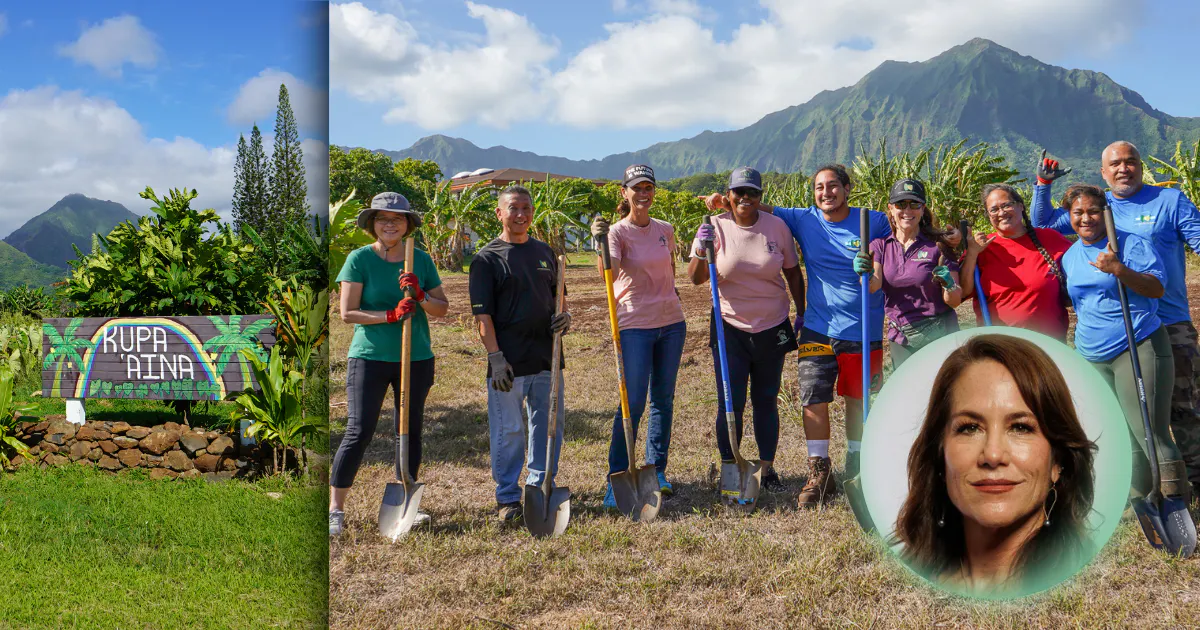
Kupa ‘Aina’s Natural Farming Project
Photos courtesy Shawn Kana‘iaupuni
What organizations are you involved with that support ʻāina?
Partners in Development Foundation’s Kupa ʻAina Natural Farming Project is paving the way for a food-secure Hawaiʻi by developing sustainable food production models and providing culturally grounded ʻāina-based experiential education and personal development. Through regenerative farming practices, strong partnerships, and a culture of aloha and kuleana, Kupa ʻAina aims to create a model of healing, resilience, and sustainable community growth that uplifts families and strengthens future generations. Located on the grounds of Kawailoa Youth and Family Wellness Center in Olomana on Oʻahu, the farm serves as a place for youth and community members to learn, heal, and connect to ʻāina.
Every second Saturday, Kupa ʻAina hosts a community workday that brings people together to mālama ʻāina. Tasks may include chopping banana trees, mulching, harvesting, and weeding, but the impact goes beyond the work itself. These workdays build a community of stewards who witness the results of collective effort and strengthen their connection to ʻāina and to one another.
I welcome you to join our Kupa ʻAina Community Workdays and restorative mālama ʻāina alongside myself, our Kupa ʻAina team, and our community. When you volunteer with us, you’re helping to provide free and nutritious produce to ʻohana, cultivating a puʻuhonua (sanctuary) for our kaiāulu (community), and strengthening food security for Hawaiʻi.
Learn more about Kupa ʻAina >>
Lisa Spain
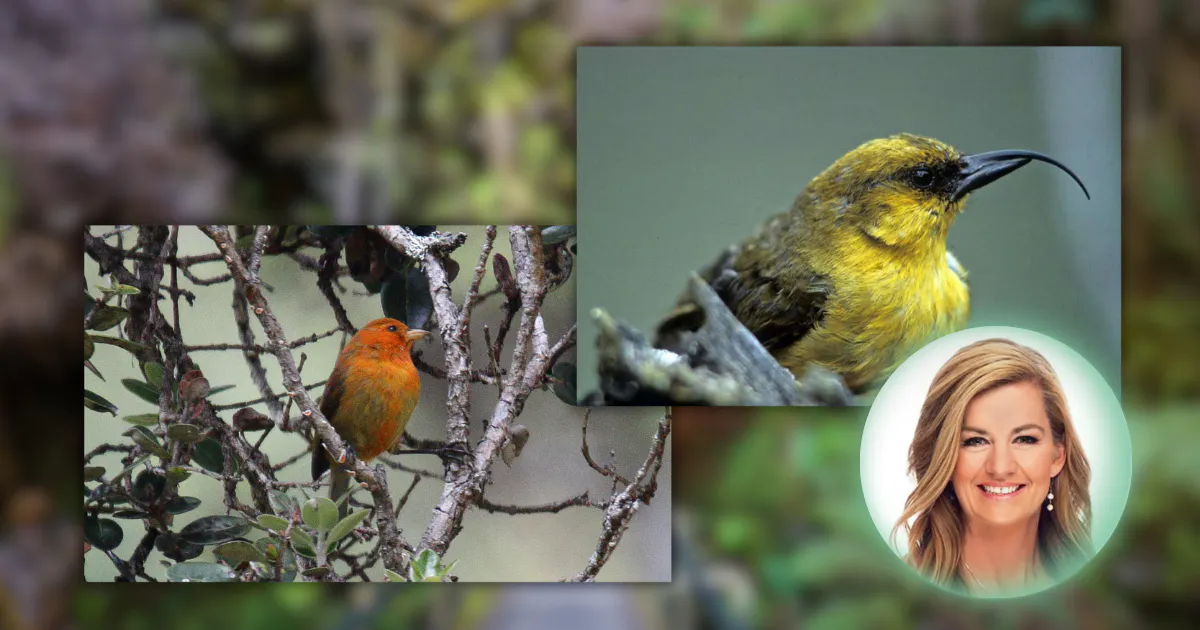
The Hawai‘i Akepa (left) and ʻAkiapōlāʻau are two endangered Hawaiian Honeycreepers that can be found at Hawai‘i Volcanoes National Park
What organizations are you involved with that support ʻāina?
Through my work on the Governor-appointed State of Hawaiʻi Endangered Species Committee (ESRC), I help review Habitat Conservation Plans and Safe Harbor agreements to ensure that land use is balanced with the protection and recovery of our most vulnerable native species. We provide the rigorous oversight and scientific recommendations necessary to protect endangered species from harm and restore critical habitats across the islands. By prioritizing the survival of our rarest flora and fauna, we directly safeguard the biological integrity and future of the ‘āina.
Where do you go in Hawaiʻi to feel restored or grounded?
I trail run through the native forests of Hawaiʻi Volcanoes National Park, where the air is cool and the presence of diverse native forests feels timeless. Being in a space where the song of native honeycreepers still dominates the silence reminds me of the resilience of Hawaiʻi’s ecosystems. These thriving, beautiful landscapes provide the clarity and inspiration I need to continue my long-term work in conservation.
Learn more about the Hawaiʻi Endangered Species Committee >>
Emily Fukunaga
What practice helps you stay connected to ‘āina?
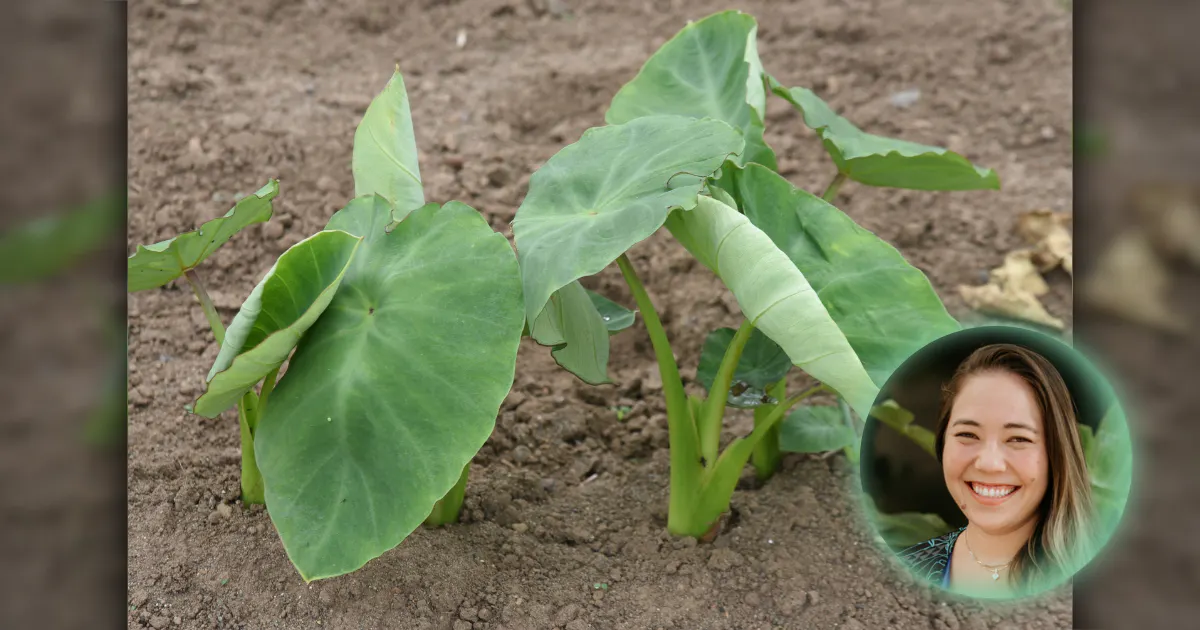
For me, staying connected to ʻāina means tending my garden. I love spending time nurturing plants, and I’m still caring for the kalo patch I established during my Omidyar Fellows program experience. It’s a daily reminder that stewardship is iterative, rooted in patience, and grounded in relationship with the land.
In what ways does your organization support ‘āina well-being?
At Servco, we support ʻāina well-being by advancing renewable energy powertrains in Hawaiʻi, including EVs, hybrids, and emerging hydrogen technologies. We work closely with Toyota, Lexus, and the broader dealer network to accelerate the adoption of cleaner transportation options. Hybrids in particular have been a foundational bridge for Hawaiʻi’s drivers, delivering strong fuel efficiency gains and helping reduce emissions while the charging infrastructure continues to scale.
This story appears in the March/April 2026 issue of Taking on Tomorrow.

Hawai‘i News Now — Spotlight Now explores sex trafficking in Hawai‘i: how kids are targeted online, warning signs, hotel red flags and training, and support for survivors.