Written by: Ben Treviño, Network Coordinator
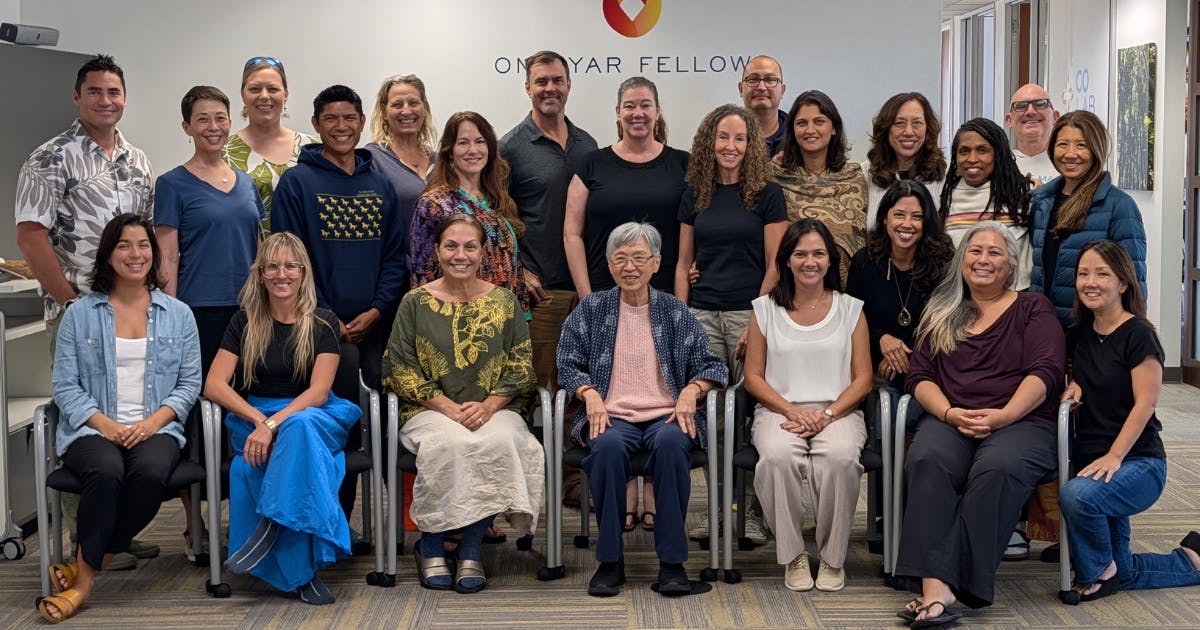
Last December, 20 Fellows joined a two-day masterclass with Norma Kawelokū Wong to collectively learn how we might “meet the moment” with multi-generational strategy.
Building on reflections and philosophy shared in her recent book When No Thing Works and the forthcoming book Who We are Becoming Matters , Norma reflected on questions such as, “How do we arise into potent possibilities rather than just defend against harm?”, “What are the attributes and practices that will serve us, and the behaviors and habits that will undermine us?”, and “Can this moment provide the opportunity to create and work toward a future for our descendants that centers Hawaiʻi’s ʻike (wisdom), values, and ways?” while also teaching physical, breath, and resonance practice.
An ordained Zen priest and former elected lawmaker, in her own words, Norma grew up “local in that sense where you would embrace many different spiritual practices as if it were food that you would eat: depending on what occasion it was and whose house you were going to.” Her journey to a deep knowledge of these spiritual practices included experiences that connected her to her indigenous ancestry from both Hawaiʻi and China. “I attended Kamehameha from the 7th grade to the 12th grade, but I never felt more Hawaiian than the first time I full-throated threw myself into Zen chanting.” (Quotes from Nā Wāhine Buda Kiakahi: The Legacy of Hawaiian Women Buddhists.)
Given the evident instability in what used to be reliable institutions, much discussion was dedicated to unpacking the role of those institutions in multigenerational strategy. Over generations, strategists must make space for an “emergent worldview” that adapts to evolving conditions. Systems that were designed by a previous worldview that no longer fit current conditions will not redesign themselves—they will protect themselves.
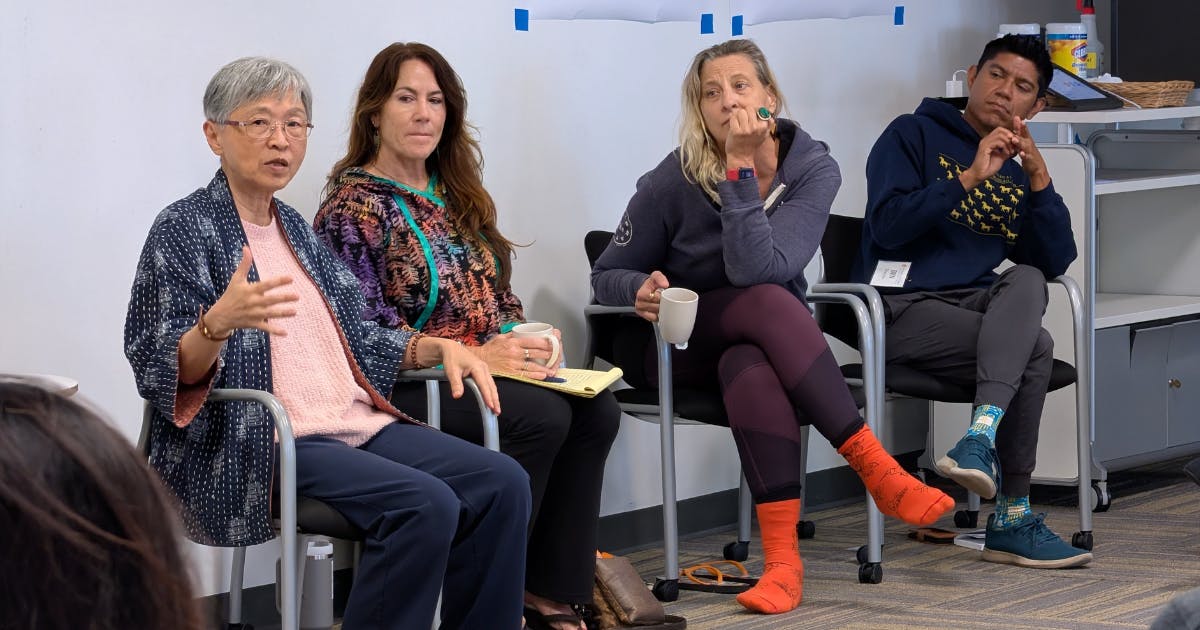
The strategy involved in arriving at a future with better adapted structures means building new structures that reflect the emerging worldview in parallel. Sometimes this will involve “hacking” existing institutions—adaptive re-use and re-purposing of parts of today’s institutions—but more often it will involve connecting with others and working backwards from a specific multigenerational outcome. Norma gave the powerful example of the revitalization of the Hawaiian language: In 1985, just 32 island children under 18 spoke Hawaiian; today the estimates of speakers range from 18,000 - 30,000.
Throwing around terms like “institutional collapse” belies an optimism rooted in Hawaiʻi’s unique gifts and still-present practices of aloha, including something we all do when we take the time to do so: talk story. Somewhat counterintuitively, most calls for Norma’s community work (along with her contemporary and beloved collaborator Puanani Burgess) are outside of Hawaiʻi. As she closed out this surprisingly rare opportunity to do a deep dive in her home, she remarked, “Do I have high hopes for Hawaiʻi? Hell yeah.”
This story appears in the January/February 2026 issue of Taking on Tomorrow.
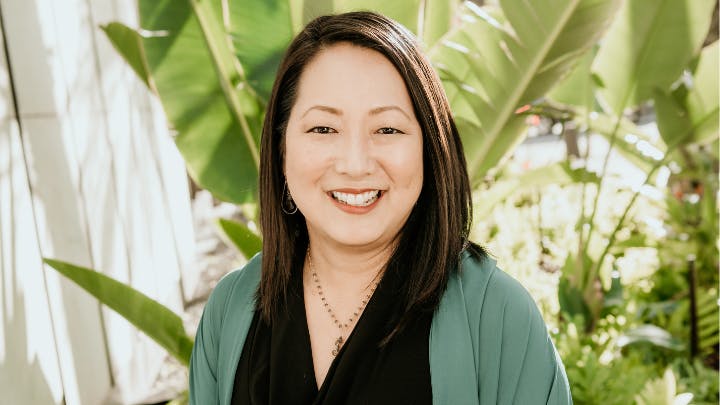
Pacific Business News — Ann Teranishi has been appointed to the Federal Reserve Bank of San Francisco’s Community Depository Institutions Advisory Council for the Twelfth District.