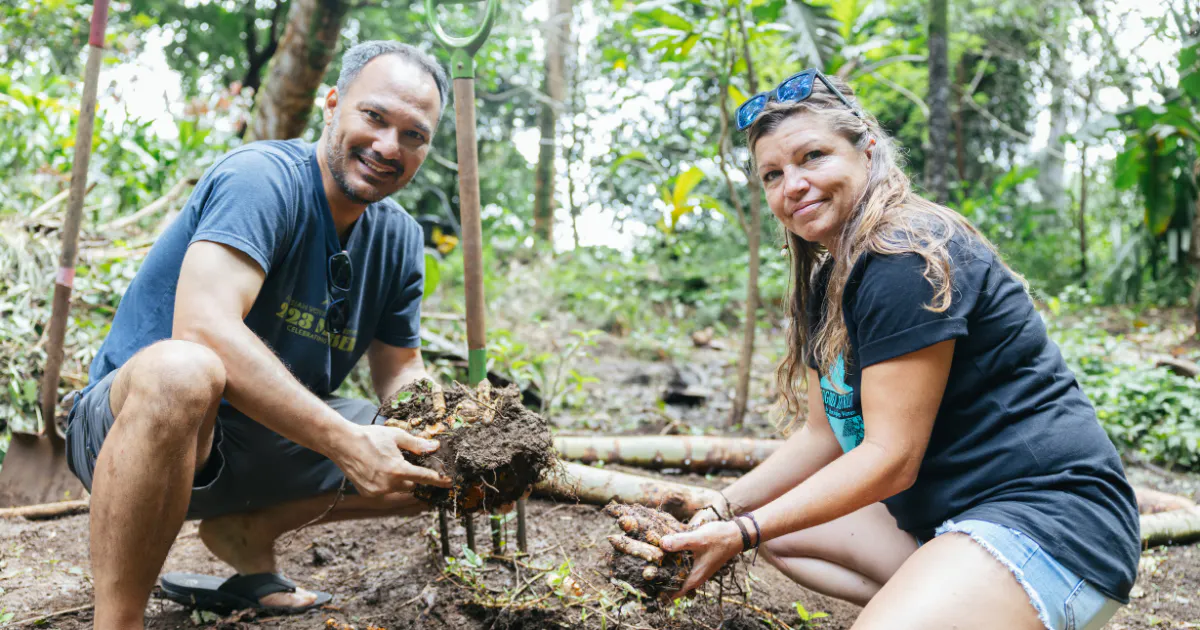
Autumn Ness, right, with Cohort X Fellow Olin Lagon
By: Autumn Ness
When I was a kid, I thought time travel worked like Back to the Future. You build a machine, hit 88 miles per hour, and somehow jump from one point in time to another.
After recent cohort sessions, I’ve been wondering if we’ve been thinking about time travel all wrong.
One of the core invitations of the Omidyar Fellows program has been to lift our eyes from the immediate challenges in front of us and look toward a 100-year horizon. Not to focus on the daily tasks, the crises, the obstacles, or the endless to-do lists, but to imagine a future worth moving toward. To define that future in tangible terms.
It reminds me of surfing and skateboarding. When you’re learning, the instinct is to stare at your feet. You focus on every wobble, every crack in the pavement or bump in the water. But the moment you look down, you crash. The smallest thing can take you out.
The trick is to look up. Lock your eyes on the horizon. Somehow your body follows.
Throughout the fellowship, we’ve spent time sharing our horizon stories. Detailing the future we create if we stay committed to the work. During those moments, something strange happens to me. For brief flashes, I feel transported there. The future stops feeling hypothetical and starts feeling real. I can feel what it is like to live in a Hawaiʻi where communities are deeply connected to ʻāina and where food systems, health systems, housing, and ecological restoration work together instead of in isolation. For a moment, I am standing in that future.
Then, during our recent gathering at Hoʻoulu ʻĀina, I experienced the opposite.
We stepped into the laʻau lapaʻau hale and I was suddenly transported backward. The smell, the plants, the feeling of the space unlocked a part of me I hadn’t visited in years. Instantly, I was back in my former life in Japan where I practiced herbal medicine and harvested remedies from the forests around me. That was before the tsunami and nuclear meltdown dumped radioactive Fukushima fallout in those same forests. I suddenly remembered what we had and what it was like to lose it all. I was suddenly grieving a loss that is 15 years old. My body remembered something my mind had tucked away in the name of self-preservation.
The experience overwhelmed me. I ducked into the surrounding bushes, crying for reasons I couldn’t fully explain.
When I returned, my fellow Fellows simply made space. Some said nothing at all. Others invited me to share only what I wanted to share. Later, beneath a tent rattled by thunder and rain, we continued speaking our horizon stories aloud, at times shouting our visions over the storm itself.
That’s when it struck me: Time travel may be entirely real.
Not because of machines or flux capacitors, but because humans carry both memory and imagination. We can collectively visit the future through vision. We can revisit the past through place, story, smell, and relationship. The ability to move through time lives not in technology, but in our bodies, our communities, and our shared dreams.
Maybe the real work is learning how to travel together. I’m deeply grateful for the opportunity to practice this new time-traveling skill with my fellow Fellows and for the guides and mentors who keep inviting us to lift our eyes to the horizon long enough to remember where we’ve come from and catch a glimpse of where we’re headed.
This story appears in the May/June 2026 issue of Taking on Tomorrow.
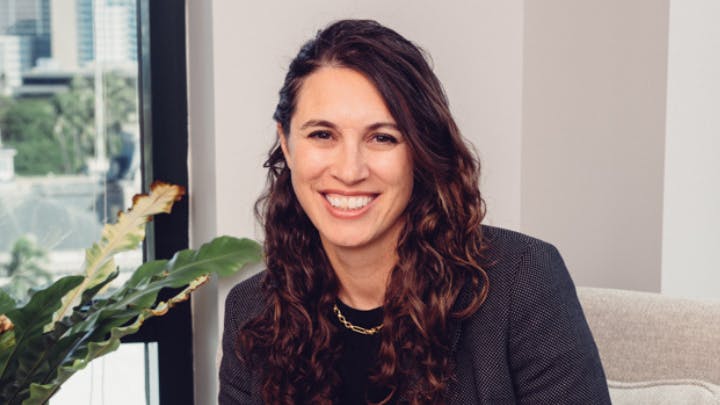
Pilali — Ashley Lukens and Wren Wescoatt sit down with Dawn Lippert, founder and CEO of Elemental Impact, to discuss climate innovation, investment, and the role Hawaiʻi can play in developing solutions for a rapidly changing planet.