By: Nicole Velasco and Leaders Lab Participants
Leaders Lab is in full stride. This year marks the culmination of the original three-part journey for the original five thematic lab groups, as participants return for their third and final convening—this time bringing a team member to collaborate on an enduring systemic challenge. This marks a meaningful shift from personal leadership development to collective action.
Building on last year’s expansion to Maui and Hawaiʻi Island, 2026 also welcomes Kauaʻi into the Leaders Lab ʻohana. For the first time, all four counties are part of this growing network of leaders committed to place-based, values-driven change. Neighbor island lab groups are progressing through their second labs, deepening the peer relationships and ʻāina-rooted perspectives that are at the heart of the program.
Across our islands, Leaders Lab continues to affirm what we believe: that lasting change takes root when leaders are grounded in who they are, connected to one another, and anchored in this place we call home.
As Leaders Lab evolves, so does our understanding of what Hawaiʻi’s leaders need most. We are actively learning from this year’s team-focused convenings and what they unlock. This real-time learning is shaping how we think about what comes next.
We extend our mahalo to the Fellows whose time, energy, and aloha make Leaders Lab possible: Janice Ikeda, Kalani Kaʻanā'anā, Karen Lee, Sondra Leiggi Brandon, Kapā Oliveira, Mahina Paishon, Christine Sakuda, Marissa Sandblom, Stephanie Shipton, Joshua Wisch, George Yarbrough, and Darcie Yukimura.
The true impact of Leaders Lab is found in the people and communities it touches. We invited participants to reflect on their experiences, challenges, and aspirations, and we share their voices below.
Responses have been edited for brevity and clarity.
Lianna Lam
Leaders Lab for Educators and Academic Leaders
Science Teacher and English Learner Coordinator at Kaimukī Middle School
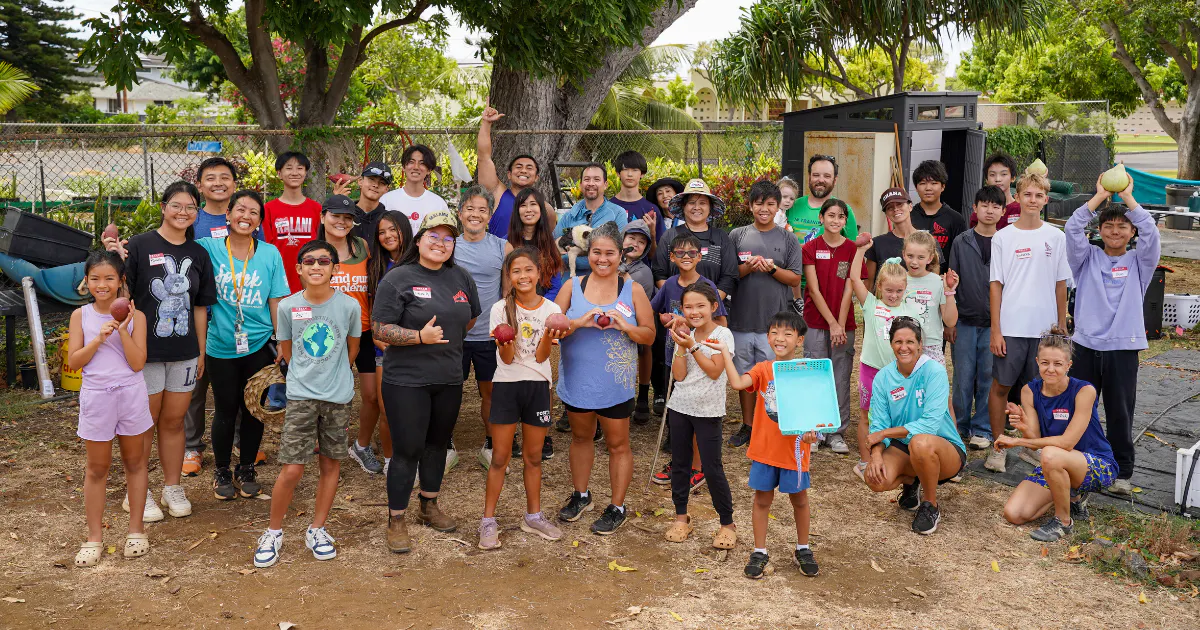
Students and Staff at Kaimukī Middle School’s Kīpuka Garden
Photo courtesy Lianna Lam
Share something from Leaders Lab that meaningfully influenced your leadership, decision-making, or sense of possibility.
Leaders Lab in May 2024 was especially transformational for me as a leader. I was still healing from not passing the DOE’s Hawaiʻi Certification Institute for School Leaders (HICISL) summer bootcamp, which left me questioning my leadership abilities and where I fit within the system. After HICISL, I served as a first-year Temporary Assignment Vice Principal before transitioning back to Kaimukī Middle as a science teacher.
I thought I was healed, but then the Leaders Lab “Big Welcome” brought me to tears. The experience felt deeply healing and affirming for me as a leader. It was such a contrast to other leadership experiences centered on high-pressure evaluation rather than authentic growth. Instead, Leaders Lab welcomed all parts of us, modeling authenticity, vulnerability, and trust in our unique leadership journeys.
After the session, I returned to Kaimukī Middle School with a renewed sense of clarity and confidence in my leadership approach. I realized I could still lead from any position. What I thought were leadership liabilities—positivity, love, and unconventional passion for aloha ʻāina—were actually my unique strengths. Together with my closest friends, we birthed the Kīpuka Garden at Kaimukī Middle to address our school’s need for belonging and connection to place.
What is something you experienced through Leaders Lab that you don’t think would have happened otherwise?
In addition to Leaders Lab’s invaluable contributions to my healing and embracing of leadership style, Leaders Lab modeled leadership skills and provided connections to resources that helped create the Kīpuka Garden. The friendships I made at Leaders Lab also enabled my attendance at the Schools of the Future Conference, leading to connections that resulted in an irrigation system workshop that brought precious water to the Kīpuka, as well as a weekly afterschool gardening program. Another Leaders Lab friend offered kukui nut trees for our future aloha circle, while another invited me to a DEI conference and connected me with lāʻau lapaʻau practitioners that could host family workshops in the Kīpuka.
This year, students designed and painted a mural in the Kīpuka Garden, telling the moʻolelo of our ʻāina in Kaimukī so future generations can find resilience in knowing who they are and where they come from. The Kīpuka Garden has engaged 700 students and alumni, 45 staff members, 140 volunteers, 75 visitors, 10 cultural practitioners, and more than 15 community partners, including Mālama Maunalua, NOAA Ocean Guardian, and Lei Poinaʻole. The Kīpuka Garden is transforming us through a shared purpose, rooting us in beloved people and place.
I am deeply grateful for the thoughtful leadership modeling and learning from Leaders Lab. Through the Kīpuka Garden, I hope students experience the same thing the Leaders Lab gave me: a deep sense that they belong, their gifts matter, and they can lead from exactly where they are.
What is something that you are currently working on and why does it matter to your community?
The challenge we’re working on is strengthening students’ sense of belonging through Kīpuka Garden, whose mission is to empower communities of aloha ‘āina.
Kaimukī Middle is an urban public school serving a blend of local families and those newly moved to Hawaiʻi, resulting in some students not having a strong relationship with our ʻāina and community. Our school data shows that 61% of students feel a sense of belonging at school. Although this is higher than the DOE average of 54%, it is concerning that 39% of our students do not feel like they belong. We believe ALL children deserve access to a high-quality education—one where they feel seen and loved while developing their gifts and purpose.
Shortly after Leaders Lab’s inaugural 2024 lab, the Kaimukī Kīpuka Garden was birthed to strengthen students’ sense of belonging through ʻāina education. Students designed and built the Kīpuka Garden with the mission of empowering communities of aloha ʻāina through hands-on, experiential, place-based, service learning. The Kīpuka Garden matters because it is the only place on campus where students, staff, and community members come together to aloha ʻāina, connecting people and place. In the Kīpuka Garden, students and teachers also create shared meaning and purpose by applying classroom learning to restoring the land in the Kīpuka Garden, ultimately benefiting Maunalua Bay.
Blayne Higa
Leaders Lab on Hawaiʻi Island
Reverend of Kona Hongwanji Buddhist Temple
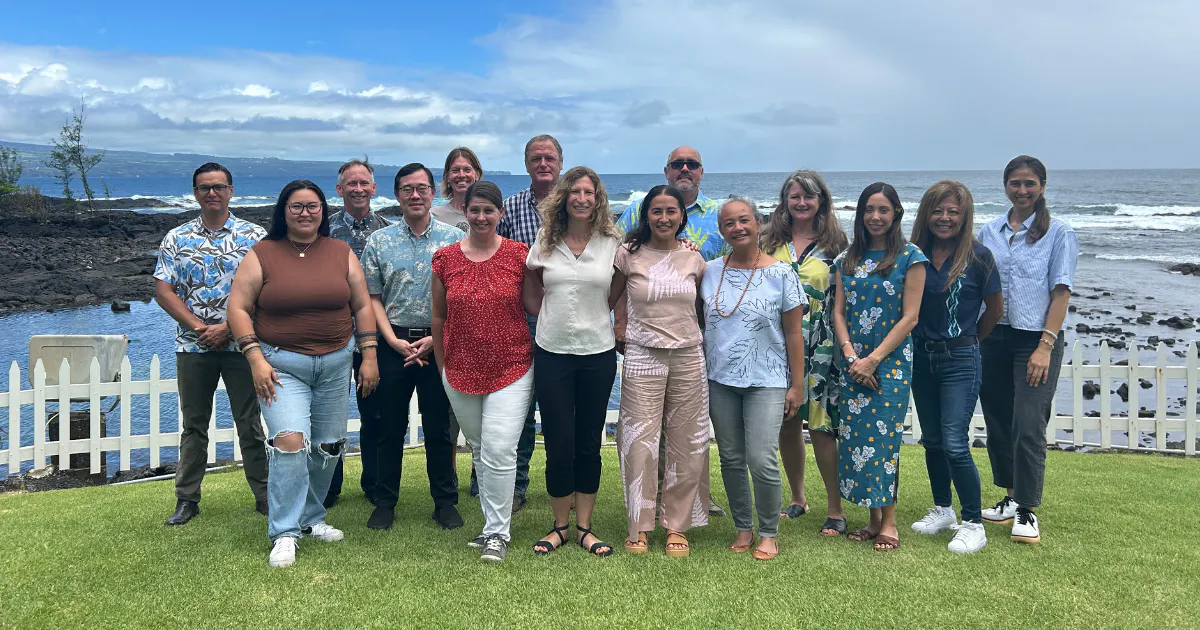
Leaders Lab on Hawai‘i Island participants at their second convening in May 2026
What is something you are currently working on and why does it matter to your community?
One challenge I am working on is guiding organizational transformation within a spiritual community with nearly 130 years of history. This matters deeply to our community because we seek to honor the legacy and devotion of previous generations while meeting the needs of current and future members.
The work requires us to ask difficult but necessary questions:
- How do we preserve what is most meaningful to our community without being constrained by outdated structures or habits?
- How do we embrace intentional, adaptive change so our organization can be more innovative, responsive, and attuned to the realities of the present moment?
Ultimately, this endeavor matters because it aims to create a more welcoming, vibrant, and sustainable community—one grounded in the Buddhist teachings of impermanence, interdependence, and compassion, enabling us to serve all who seek connection, spiritual growth, and refuge in our often troubled world.
Share something from Leaders Lab that meaningfully influenced your leadership, decision-making, or sense of possibility.
One meaningful part of Leaders Lab was learning how other leaders navigated challenges similar to my own. Their stories reminded me that leadership is not always about having the perfect answer but about showing up for others through relationship-building, deep listening, and staying grounded in a shared purpose. It has helped me reflect on the qualities of effective leadership: empathy, alignment of personal values with collective goals, and creating conditions that enable people to move forward together. These insights have reframed how I think about decision-making and expanded my sense of what is possible when change is led with sensitivity, trust, and intention.
What is something you experienced through Leaders Lab that you don’t think would have happened otherwise?
Connecting with people whose experiences and perspectives differ from mine has helped me grow as a leader and see more clearly how each part of our community shapes the greater whole. Leaders Lab has deepened my understanding of our interconnectedness and interdependence, as well as the need for expansive thinking and an open heart in effective problem-solving. Learning about the lived experiences of fellow leaders has been especially powerful and deeply enriching, both personally and professionally.
Lauren Whittemore
Leaders Lab on Hawai‘i Island
Executive Director of the Hawaiʻi Island Community Health Foundation
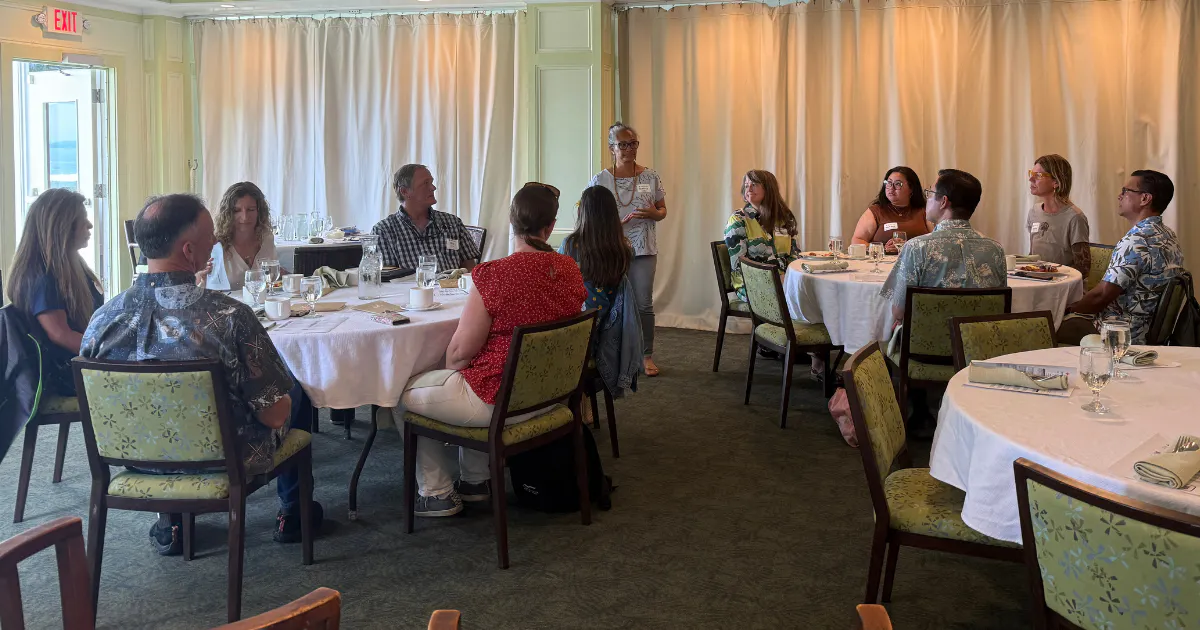
Leaders Lab on Hawai‘i Island participants at their second convening in May 2026
Share something from Leaders Lab that meaningfully influenced your leadership, decision-making, or sense of possibility.
What has stayed with me is the feeling I came away with, especially after our first gathering in Waimea. I left feeling lighter, more hopeful, and more connected to the people who are helping shape the future of Hawai‘i Island.
In our day-to-day work, it is easy to become consumed by deadlines, challenges, and responsibilities. Leaders Lab created space to pause, reflect, and reconnect with a larger sense of purpose. One of the most meaningful aspects of the experience was being surrounded by people from different professional, cultural, and personal backgrounds who all share a deep commitment to this island. Whether working in business, healthcare, government, or nonprofit leadership, each person brought a unique perspective while also demonstrating a shared sense of kuleana. It reminded me that leadership does not belong to any one sector or title. Rather, it is a collective responsibility rooted in service, relationships, and care for something larger than ourselves.
The experience strengthened my belief that Hawai‘i Island’s greatest asset is its people. It reinforced for me that leadership is most effective when it is rooted in place, grounded in culture, connected to ʻāina, and guided by mutual respect. That perspective continues to influence how I approach my work, build partnerships, and think about the future of our island.
What is something you experienced through Leaders Lab that you don’t think would have happened otherwise?
Leaders Lab gave me the opportunity to build meaningful relationships with people I likely would not have crossed paths with in my day-to-day work. I learned a tremendous amount about the work happening across Hawai‘i Island and gained a deeper appreciation for the people leading it.
What surprised me most was discovering how interconnected we all are. There were several people in my lab whom I had never met, yet we quickly realized we were separated by only one degree, shared mutual friends, or had overlapping professional interests. Those connections made our large island feel much smaller and reminded me how much opportunity exists when people step outside their usual circles and intentionally come together.
More than anything, I am grateful for the intentionality behind the program. Leaders Lab did not simply create a networking opportunity; it created an environment where people could build trust, share ideas, and learn from one another. The relationships and perspectives I gained through the experience are ones I expect to carry with me long after the program ends.
What project are you currently working on and why does it matter to your community?
I’m currently working on launching Hawai‘i Island Community Health Foundation, the charitable arm of Hawai‘i Island Community Health Center (HICHC). While HICHC has long benefited from generous donors and community support, building a dedicated foundation allows us to be much more intentional about philanthropy. It creates opportunities to connect donors with the causes they care about most while helping advance the health center’s mission of providing accessible, high-quality healthcare across Hawai‘i Island. It’s exciting work because it’s about building relationships, connecting people to purpose, and creating new ways for our community to invest in the health and well-being of our island.
One project I’m particularly excited about is exploring a childcare stipend program for healthcare workers and staff at HICHC. It may seem like an employee benefit, but the impact reaches far beyond one employee or one family. Childcare is one of the biggest challenges facing working families today, especially in rural communities where options can be limited and costs continue to rise. Reliable childcare allows parents to come to work consistently, reduces stress on families, and helps retain the healthcare workforce our community depends on every day.
The ripple effect touches every level of the community. Our workforce is one of our most valuable assets. These are the nurses, medical assistants, behavioral health providers, outreach workers, receptionists, and support staff who help keep healthcare accessible for nearly 40,000 Hawai‘i Island residents. When healthcare workers have stable childcare, clinics can maintain staffing, appointments remain available, and patients can access care more consistently. At its core, this project reflects a belief that caring for our community also means caring for the people who serve it. By supporting local families and strengthening the healthcare workforce, we are helping create a healthier, more resilient community for the long term.
Eric Chang
Leaders Lab on Maui
Vice President and General Manager of Servco Lexus Maui and Servco Subaru Maui
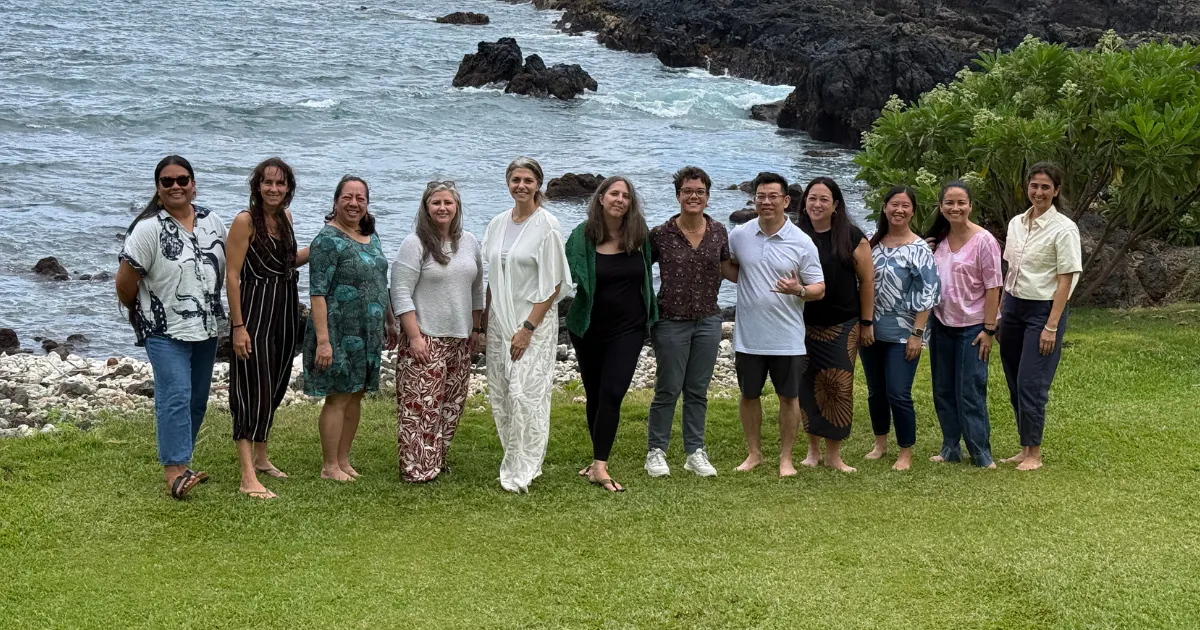
Leaders Lab on Maui participants at their second convening in May 2026
What is something you are currently working on and why does it matter to your community?
Hawaiʻi continues to face the challenge of “brain drain,” with many promising and talented young people leaving the islands in search of greater career opportunities elsewhere. This trend is particularly concerning as skilled labor shortages in the automotive industry continue to grow, creating challenges for employers seeking qualified technicians. At Servco, we offer several workforce development programs that provide students with a clear path forward after high school, including the Servco Technical Education Program (S-TEP), apprenticeship opportunities, internships, and hands-on training that lead directly to careers as automotive technicians. We just need a way to bring awareness of these programs to the students.
What is something you experienced through Leaders Lab that you don’t think would have happened otherwise?
I am extremely grateful to the Hawaiʻi Leadership Forum for the Maui Leaders Lab. Without it, I wouldn’t have met Chloe Yap, who I thank for being the missing piece we needed to kickstart our outreach into our local high schools. Within a few months, we were already participating in H.P. Baldwin High School’s annual automotive program mock interviews and provided students with a dealership overview and tour. We plan to expand to more schools in the upcoming school year.
Share something from Leaders Lab that meaningfully influenced your leadership, decision-making, or sense of possibility?
Through discussions with Chloe Yap at the Maui Economic Development Board, and outreach to Maui’s high school automotive programs, it had become clear that increasing awareness of local career opportunities is critical to retaining homegrown talent and strengthening Hawaiʻi’s workforce. By engaging students early and increasing awareness of the rewarding careers available in the automotive field, we can help address these challenges.
Emi Au
Leaders Lab for Entrepreneurs, Business, and Labor Leaders
CFO of HawaiiUSA Federal Credit Union
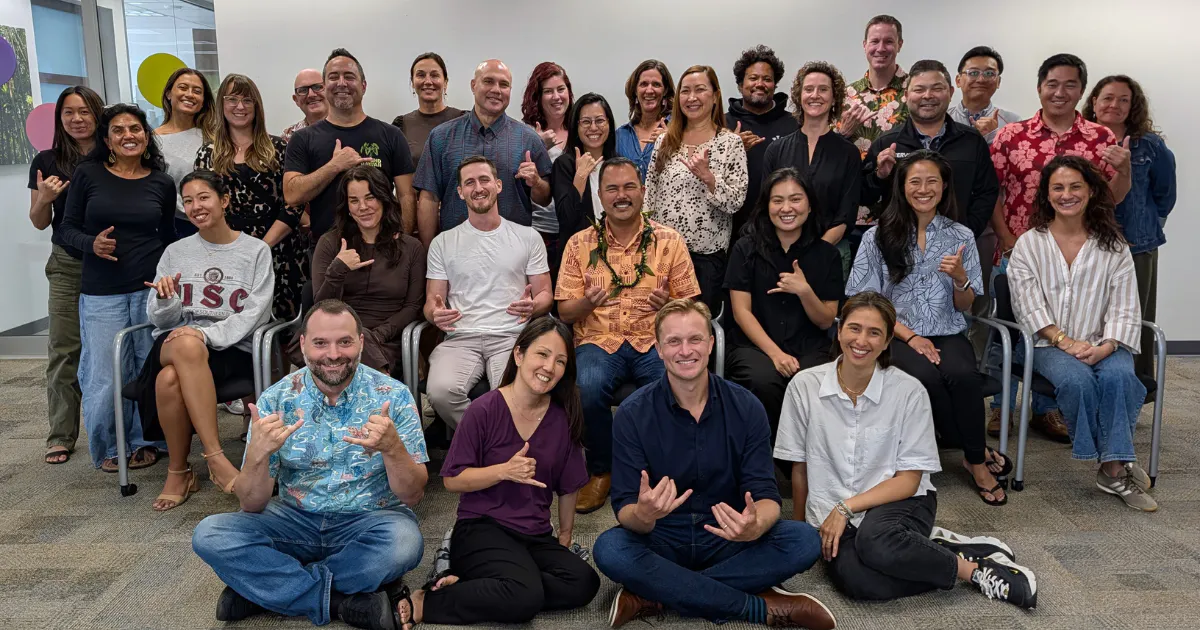
Leaders Lab for Entrepreneurs, Business, and Labor Leaders participants at their third convening in April 2026
What is something you are currently working on and why does it matter to your community?
At HawaiiUSA Federal Credit Union, our purpose is to enrich lives and enable people and families to thrive in our island community. By staying true to our purpose and adopting the technological advances that are currently modernizing how our members integrate banking into their everyday lives, we are evaluating how to deploy AI strategically, establish an up-skilling framework for our team members, and maintain high value roles that still require human touch.
Our goal is to automate repetitive and low-leverage processes and elevate human talent into strategic roles and key member facing roles. Ultimately, we want to modernize our business to ensure our members have a frictionless banking experience. However, we want to ensure we continue to offer and provide our community jobs so that our people can stay in Hawaiʻi and thrive in Hawaiʻi. Our employees are also our members, and ensuring that we don’t over-automate the member experience is critical as we look for opportunities to integrate technology.
Share something from Leaders Lab that meaningfully influenced your leadership, decision-making, or sense of possibility.
By bringing in a partner into the Leader Lab session, it expanded the realm of possibilities. However, it wasn’t until we were offered the tools to examine our challenge and opportunity that we had a few “aha” moments.
For myself, it was using the Iceberg Model—a systems thinking tool used to identify the root causes of problems by distinguishing between observable events and underlying structures, patterns, and mental models. When we were asked to brainstorm each layer, and then arrived at the base—the mental models—it truly hit me that to effectively implement change, we need to understand the core beliefs and values of our team members.
For my business partner, it was the Stakeholder Constellation Map that meaningfully influenced his approach to organizational realignment with the integration of technology. He felt it was valuable to take the time to identify the key stakeholders and prioritize them based on impact and influence. We paired the learnings from the Iceberg Model with the Stakeholder Constellation Map and worked on brainstorming the mental models of each key stakeholder.
Brandon Maka‘awa‘awa
Leaders Lab for Public Officials and Government Leaders
Vice President at the Nation of Hawai‘i
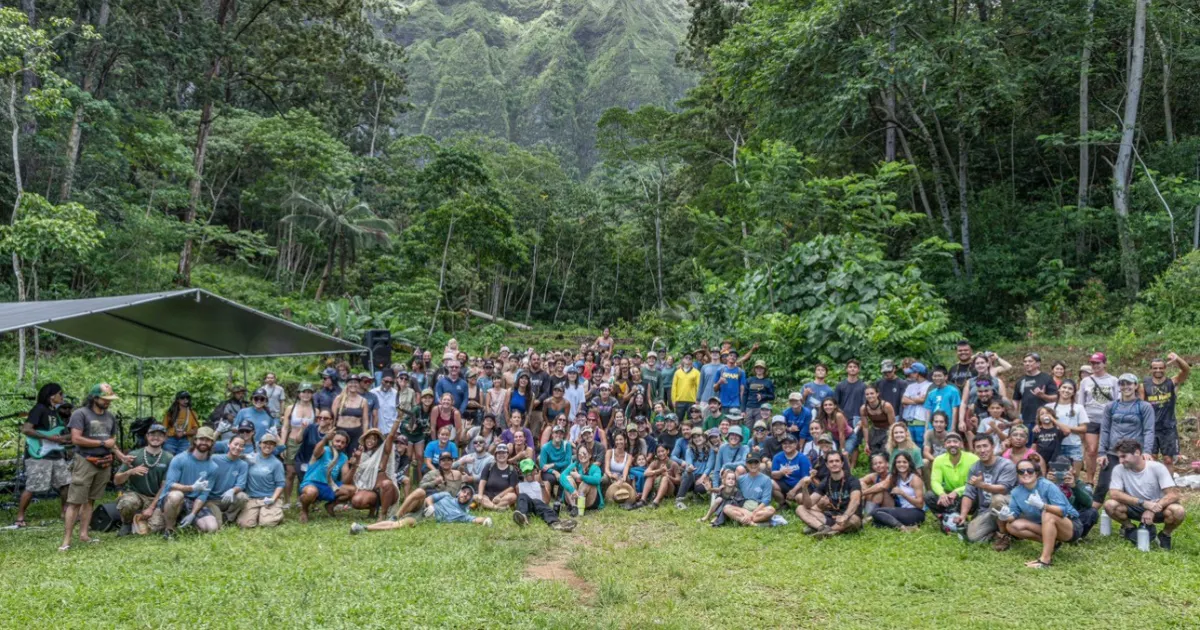
Photo courtesy Brandon Maka‘awa‘awa
What is something you are currently working on and why does it matter to your community?
One of the key challenges I am working on is how we can make our communities more climate resilient while restoring the cultural and ecological systems that once sustained Hawaiʻi for generations. At our village in Waimānalo, we are focused on ahupuaʻa restoration as a practical, community-driven solution. Through our monthly Aloha ʻĀina Days, held on the last Saturday of every month, we bring together hundreds of volunteers to help restore ancient loʻi kalo terrace systems. This work includes rebuilding traditional rock walls, replanting kalo, removing invasive plants and trees, and reestablishing native Hawaiian species such as koa and ʻōhiʻa.
We believe that many of the solutions to today’s environmental and climate challenges can be found in the traditional ahupuaʻa system. For centuries, this approach managed land and water resources in a way that was deeply aligned with nature, creating healthy ecosystems that supported thriving communities. As climate impacts become more severe, we see the restoration of these systems as an opportunity to strengthen food security, improve watershed health, reduce erosion, increase biodiversity, and build long-term community resilience.
In addition to hands-on restoration, we are exploring how modern technology can support this work. For example, we are utilizing LiDAR-equipped drones to map topography, identify historic landscape features, and better understand where wetland loʻi systems, native forests, and food forests can be restored for the greatest ecological benefit. By combining Indigenous knowledge with modern tools, we hope to develop restoration models that are both scalable and data-informed. While our current efforts are focused in Waimānalo, our larger goal is to create solutions that can be replicated across other ahupuaʻa throughout Oʻahu and Hawaiʻi.
We are interested in building partnerships with leaders, agencies, researchers, and community organizations who share a vision of creating more resilient communities through ecosystem restoration, cultural stewardship, and place-based climate adaptation. Please join us on ʻĀina Day at Pu’uhonua O Waimānalo every last Saturday of the month from 10-2 and see what a thriving and sustainable Hawaiʻi can look like. https://www.nationofhawaii.org/am-ahupuaa/
What is something you experienced through Leaders Lab that you don’t think would have happened otherwise?
I really appreciate the candidness that I saw when these different leaders came together to share their problems and triumphs. I think it’s powerful to recognize that although we may work in different sectors of governance, our problems are very similar. I look to this group for helpful guidance, and trust that these people have the heart to share with me their most honest answers.
Share something from Leaders Lab that meaningfully influenced your leadership, decision-making, or sense of possibility.
This is the only place that I think I have ever been able to interact with all the different parts of government in a real, personal way. For somebody in my line of work, these interactions are very valuable since I don’t often get these opportunities because of our political stance on sovereignty.
Tina Aiu
Leaders Lab on Kaua‘i
Executive Director of Kīpuka Kuleana
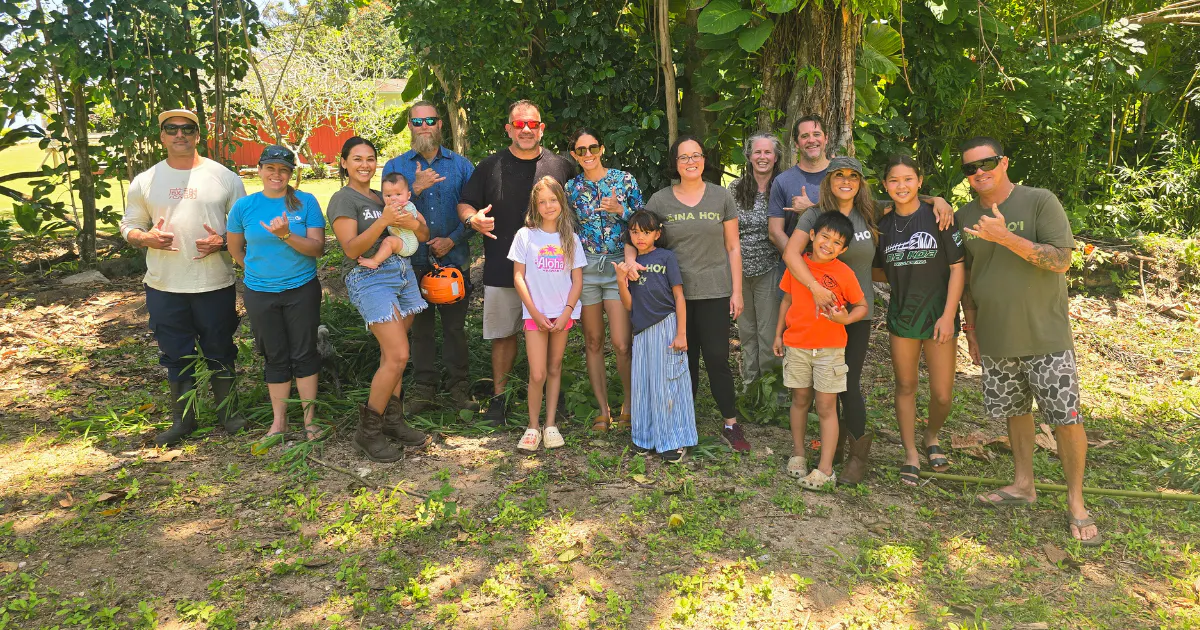
Families gather at Kīpuka Kuleana on Kaua‘i
Photo courtesy Tina Aiu
What is something you are currently working on and why does it matter to your community?
On Kauaʻi, many long-time ʻohana are experiencing a growing disconnection from their ancestral ʻāina due to historical and ongoing patterns of land dispossession. Rising land values, increasing property taxes and maintenance costs, fractioned ownership, and related pressures place significant strain on families—leaving many feeling uncertain about the future of their family lands or that their only option is to sell.
Our work at Kīpuka Kuleana responds to these challenges by connecting ʻohana to resources and learning opportunities that support the retention and passing down of ʻohana lands to the next generation. Through our ʻOhana ʻĀina workshops across Kauaʻi and follow-up navigation support by Kīpuka Kuleana staff, we connect families to estate planning, financial literacy, tax relief, title research, hoʻoponopono, and other resources, equipping them with the knowledge, tools, and supportive spaces to take informed next steps toward stewarding their lands across generations.
We work to bring family members together on their ʻāina for family reunions, work days, and gatherings to discuss their vision for their land and strategies for land protection. We also work to strengthen relationships between people and ʻāina through community ʻāina-and-kai stewardship opportunities and culture-based education programs for youth. At the county level, we advocate for increased protection of ancestral landscapes through tax policy reform.
By taking an integrated approach to addressing these growing challenges, Kīpuka Kuleana protects ancestral lands under threat, fosters the next generation of ʻāina stewards, and revitalizes relationships between people and ʻāina on Kauaʻi. Over time, these efforts will support stronger intergenerational relationships, increased family engagement in proactive steps to retain ʻohana lands, and continued care and continuity of family traditions and cultural practices across Kauaʻi.
What is something you experienced through Leaders Lab that you don’t think would have happened otherwise?
I really enjoyed connecting one-on-one with so many other leaders who are working in different sectors but doing incredible work to strengthen our community. I was reminded that many of us are navigating similar challenges while working toward a common vision of a more resilient Kauaʻi. These connections made me feel supported as a leader and less isolated in the work.
Share something from Leaders Lab that meaningfully influenced your leadership, decision-making, or sense of possibility.
As someone who has spent the last 17 years working in the land trust and conservation realm, I don’t often get a chance to spend a whole day learning alongside leaders from other sectors. Leaders Lab provided me with the opportunity to learn from leaders in government, business, health, and other areas. It was helpful to hear from these leaders how they approach challenges and sustain themselves in their work. Those conversations broadened my perspective and helped me see stronger connections between our work in land preservation and the broader systems that support community resilience and well-being.
This story appears in the May/June 2026 issue of Taking on Tomorrow.

Maui Now — U.S. Sen. Mazie Hirono hosted the 10th annual “Hawaiʻi on the Hill” with Sherry Menor, president and chief executive officer of the Chamber of Commerce Hawaiʻi.