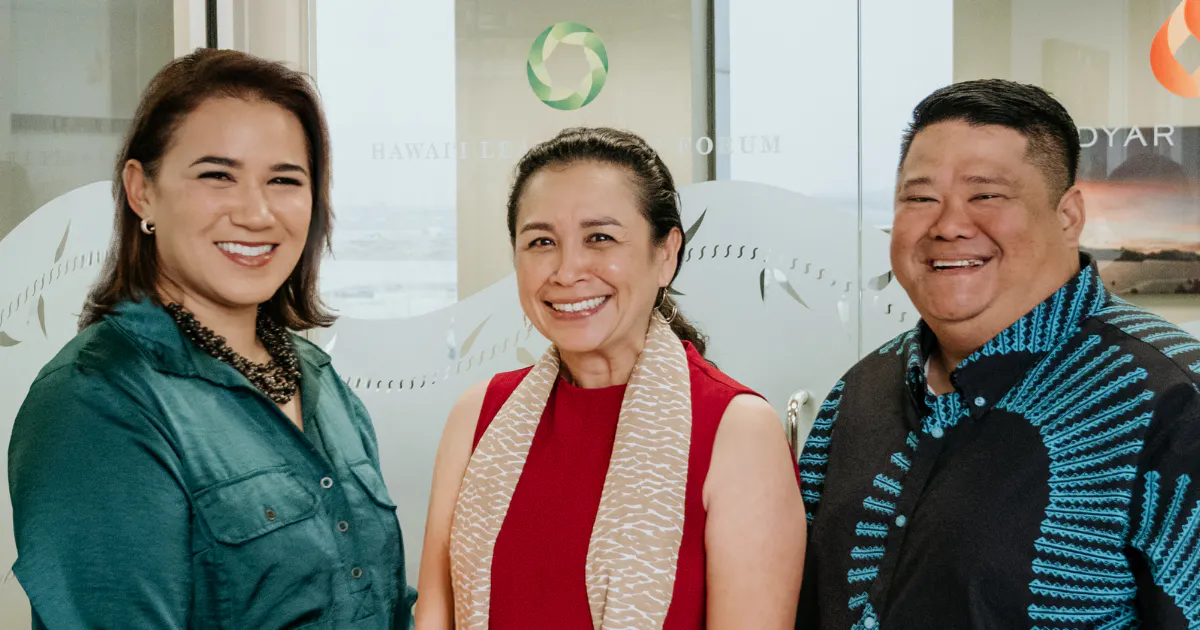
Ku‘ulani Keohokalole, left, with Cohort X Fellows Kelly Miyamura and Kaipo Perez III
How might our ancestral language of wayfinding help reframe the way we think about leadership during times of uncertainty?
Building on what Babā Yim shared as the “open naʻau” tone set in our launch, I’ve shared openly with my cohortmates how difficult it is to currently be in a personal place of limbo, with a spouse running for higher office in Washington, D.C. In particular, fielding the “what ifs” as a mom of three has been tough. My nine-year-old has now started repeating after me as curious questioners ask about our future: “We’ll cross that bridge when we get there.”
I’ve said that over and over. But it does not do much to reassure nerves. It implies that the knowing will come from timing (“when we get there”), and leaves nothing to calm the restlessness in the wait.
In our March session, Cheryl Ka‘uhane Lupenui and co-facilitator Kāhele Nahale-a encouraged us to actually think about the deep value that the sense of kilo—translated in my own words as “intuitive observation and insight”—provides us as wayfinding leaders. When you are on the ocean and kilo, you take in the cues around you and inside you. You listen for the unsaid. You stay grounded, feet planted on the wa‘a. You feel the waves as they come. You adapt, adjust the sails, and flex to the needs of the moment.
As we read in Wayfinding Leadership: Ground-breaking Wisdom for Developing Leaders, the island, over time, appears to you; you don’t sail to it— meaning, your destination is inherently unknown. What you rely on is your ability to be in tune, to listen, to learn, to pivot, to adapt, to navigate what comes your way, and you trust that the island—the destination—will reveal itself. Rather than focusing on a point A to point B linear outcome, the process of getting there, in and of itself, is the experience.
Now, when asked about our family’s future plans, I say, “we’ll cross that channel when we get there”—and that reminds me that the shifts of winds and channels are ever present in island life. Change is what we know. We find our rootedness in knowing our inherent skills as navigators who know how to wayfind through uncertainty, because we have been doing so for generations immemorial, and we will continue as leaders for generations to come.
This story appears in the May/June 2026 issue of Taking on Tomorrow.
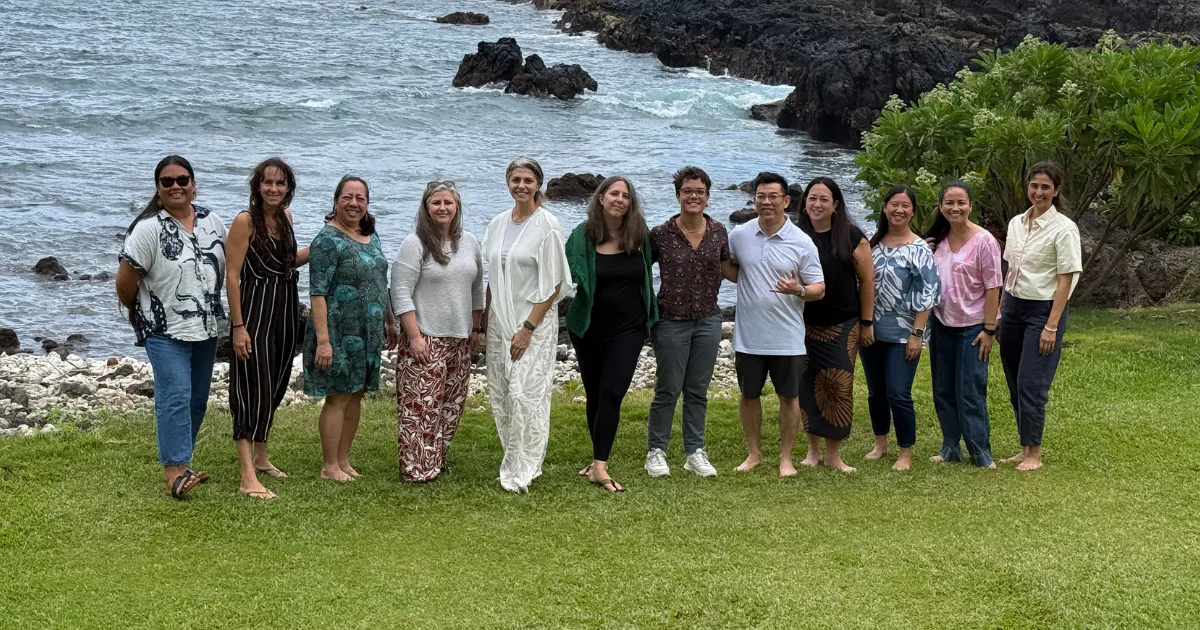
Nicole Velasco shares reflections from Leaders Lab participants on their experiences, growth, and collective action through the program and their engagement with others in this network of leaders.